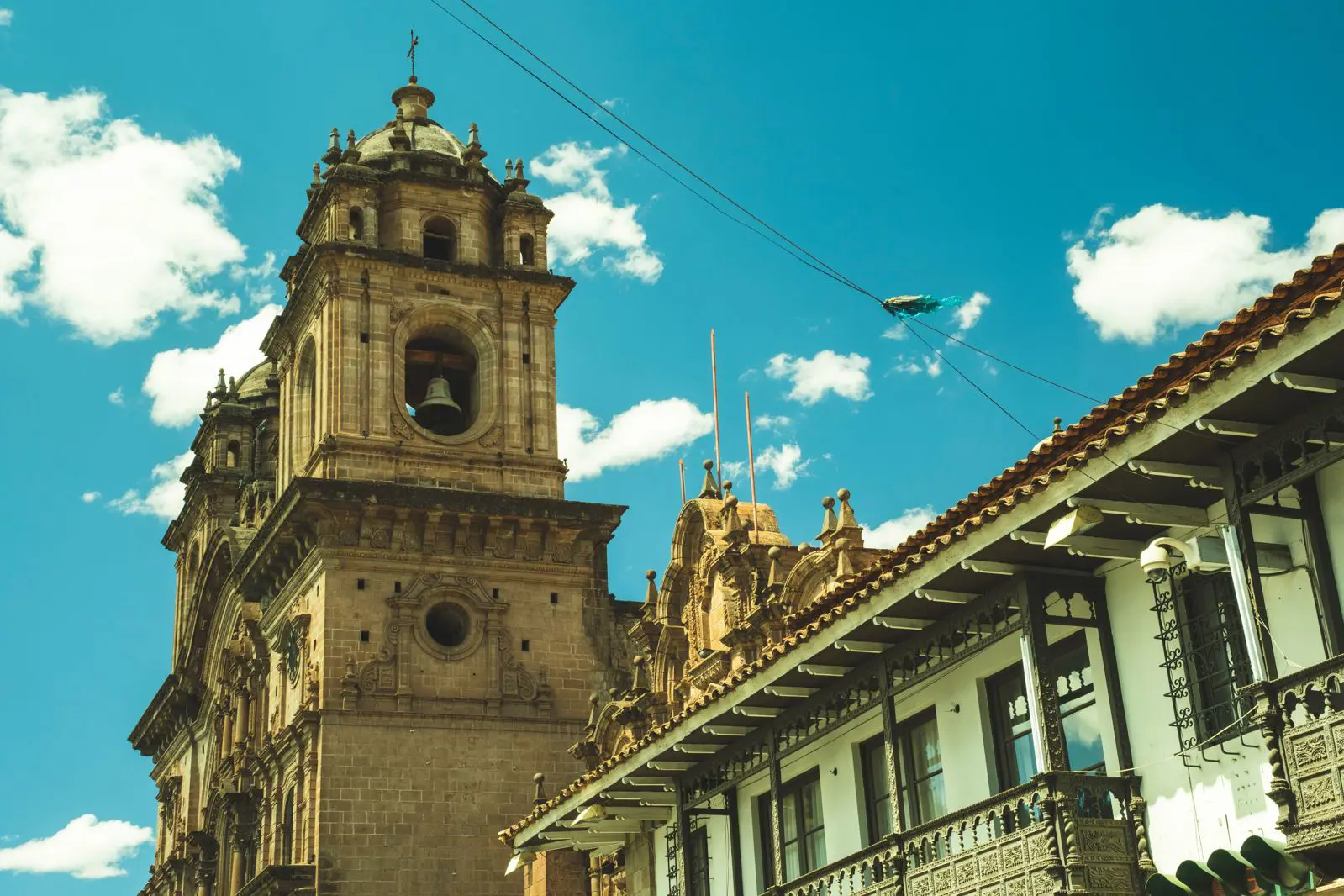
The city of Cusco is one of South America's most important tourist destinations. Located 3,399 meters above sea level in the Peruvian Andes, its urban layout is a living testament to cultural syncretism . The Spanish colonial mansions and Catholic churches were built upon the foundations of ancient pre-Columbian palaces. For this reason, it was declared a UNESCO World Heritage Site in 1983.
If you're wondering what to do in Cusco during your first few days, you should know that the historic center is home to architectural heritage, traditional markets, and museums . Archaeological sites are located on the outskirts of the city.
In this article, you'll find out what to see in Cusco on foot, with transfers, or any other option you prefer. We'll explore everything from the Plaza de Armas to the artisan neighborhood of San Blas. We'll also explain how to arrange transportation and access to archaeological sites through organized tours .
This way, your visit to the ancient Inca capital will be enriched with the necessary historical context. And if you'd like to complete your itinerary with the best things to do in Cusco, check out our tours and excursions .
The historic center: the heart of the empire
The ideal starting point for exploring the imperial city of Cusco is the Plaza de Armas. In pre-Hispanic times, this esplanade was known as Huacaypata and served as the administrative and religious center of the entire empire . Today, it's a meeting place for locals and tourists alike, and the base for guided city tours.
Understanding when the city of Cusco was founded is complex, since the occupation of the valley dates back thousands of years, but it reached its peak in the 15th century under the rule of the Inca Pachacuti, who redesigned it in the shape of a puma.
After the arrival of the Spanish in 1533, the plaza's perimeter was drastically altered. The ancient canchas (Inca palaces) were dismantled, and their stones were used in the construction of the buildings that now dominate the view: the Cathedral and the Church of the Society of Jesus . Entering the Cathedral is essential to viewing the paintings of the Cusco School, an artistic movement of indigenous painters who reinterpreted Catholic figures by incorporating Andean elements. One of the most prized pieces is the depiction of roasted guinea pig in the painting of the Last Supper.
Coricancha and Inca architecture
Just four blocks southeast of the Plaza de Armas, walking along Avenida El Sol or the alleyway of Loreto, you'll reach the Coricancha, or Temple of the Sun. This was the most sacred religious site in the city of Cusco during the Inca Empire . According to Spanish chroniclers, its interior walls were covered with sheets of solid gold that reflected the sunlight.
The Dominican order built the present-day Convent of Santo Domingo upon the stone structures of Coricancha. A visit to this complex serves to illustrate the superiority of Inca engineering: while colonial arches and vaults collapsed during the great earthquakes of 1650 and 1950, the curved Inca walls of andesite rock, assembled without any mortar, remained intact.
From Coricancha, the pedestrian route continues north along Hatun Rumiyoc Street, 300 meters away. This cobblestone walkway is flanked by the walls of the former palace of Inca Roca . Within this wall stands the famous Twelve-Angled Stone. This diorite block is the ultimate example of pre-Hispanic architectural precision, fitting so perfectly with the surrounding rocks that not even a sheet of paper can be inserted between the joints.
The San Blas neighborhood: art and tradition
Continuing the ascent from Hatun Rumiyoc Street, you enter the San Blas neighborhood, historically known as the "artisans' quarter." This area is characterized by its narrow streets, pedestrian staircases, and white-painted adobe houses with carved wooden balconies painted blue.
The main square of San Blas is located about 600 meters from the Plaza de Armas. In its center stands the Church of San Blas , which houses a pulpit carved from a single piece of cedar wood, considered a masterpiece of South American colonial art.
Let's see what's around us.
Craft workshops and silversmithing
The main activity when visiting San Blas is exploring the family workshops clustered on Carmen Alto and Tandapata streets . Since colonial times, these families have dedicated themselves to religious imagery (wood carvings of saints with elongated necks, typical of the Cusco style), ceramics, and painting. This makes it the perfect place to find quality souvenirs.
The workshops in San Blas allow you to watch silversmiths working with silver in real time. It's common to see them creating jewelry inspired by the Andean trilogy: the condor, the puma, and the serpent, as well as the Andean cross, or chacana . Likewise, the textile shops offer authentic baby alpaca garments at better prices and of higher quality than in the more touristy markets.
Gastronomy and local life: the San Pedro Market
To experience the daily routine of the residents and explore the ingredients of Peruvian cuisine, head west from the Plaza de Armas. About 800 meters along Santa Clara Street, passing through the Santa Clara Arch, you'll reach the San Pedro Central Market .
This covered market was designed in the early 20th century by the French engineer Gustave Eiffel and is the city's largest food market. The market is organized into sections: aisles dedicated to selling native potato varieties, areas for Amazonian fruits like aguaymanto and cherimoya, stalls selling large traditional loaves of bread , and areas where you can find medicinal herbs , coca leaves, and incense used in shamanic rituals.
A stop at the San Pedro Market is the perfect opportunity to enjoy local dishes at affordable prices . Highlights include chicken soup, lomo saltado, and freshly squeezed natural juices.
How to choose the best city tour in Cusco
Exploring the historic center on foot requires a full day and a good level of fitness. The city's archaeological sites, however, are not located within the city center, but rather in the hills overlooking the valley to the north. Reaching them involves traveling several kilometers and ascending to an altitude of over 3,700 meters.
Therefore, the best city tour in Cusco will be the one that allows you to explore the historic center and reach some of the former seats of political, military, and religious power of the empire.
Tours with transfers and entrance fees included are the best way to explore the historic center and archaeological sites in a single afternoon. These services eliminate the need to arrange taxis or public transportation and also include expert local guides.
Let's look at the best options for getting from the historic center to the ancient wonders of Cusco .
City Tour and visit to Sacsayhuamán in one day
The Cusco City Tour and Nearby Ruins excursion is ideal for any traveler arriving in the city. This half-day tour begins with a guided visit to the Cathedral in the Plaza de Armas and the Coricancha temple . Afterward, private transportation ascends the mountain to the four surrounding archaeological sites.
The first stop is the ceremonial fortress Sacsayhuaman , located 2 kilometers from the center and famous for its zigzag walls built with limestone blocks that weigh over 100 tons.
The itinerary continues to Qenqo, an underground worship center carved into solid rock; the ancient military fortress Puca Pucara; and Tambomachay , the temple dedicated to the worship of water, with aqueducts and waterfalls that continue to flow. This tour guarantees that an official guide will provide historical information and archaeological theories about each site.
Classic combination: City Tour and Machu Picchu
If you're only spending a few days in Cusco and want to cover all the must-see sights in one trip, the City Tour and Machu Picchu package combines these two main experiences on consecutive days . It's the perfect way to secure all your transfers and entrance fees during peak season without having to arrange each part separately.
The first day is dedicated to the urban and archaeological circuit: Coricancha and the Sacsayhuaman complex. The second day is entirely dedicated to Machu Picchu: it includes transfers from your hotel in Cusco to the train station in Ollantaytambo , train tickets to Aguas Calientes, bus tickets up to the citadel, and entrance to the Historic Sanctuary of Machu Picchu with a two-hour guided tour .
Cusco city tour by bicycle
The excursion The City Tour by mountain bike combines cultural tourism with physical activity. Unlike the traditional bus tour, this ride takes advantage of the slopes of the surrounding hills . The adventure begins on the outskirts of the city, descending along old dirt tracks and secondary roads that connect less-visited archaeological sites .
The route ends by venturing into the dense traffic of the historic center. This stage involves cycling through cobbled alleyways and squares, achieving a complete immersion in the urban rhythm of the former imperial capital.
Published by Has Chacon on 11/06/2026